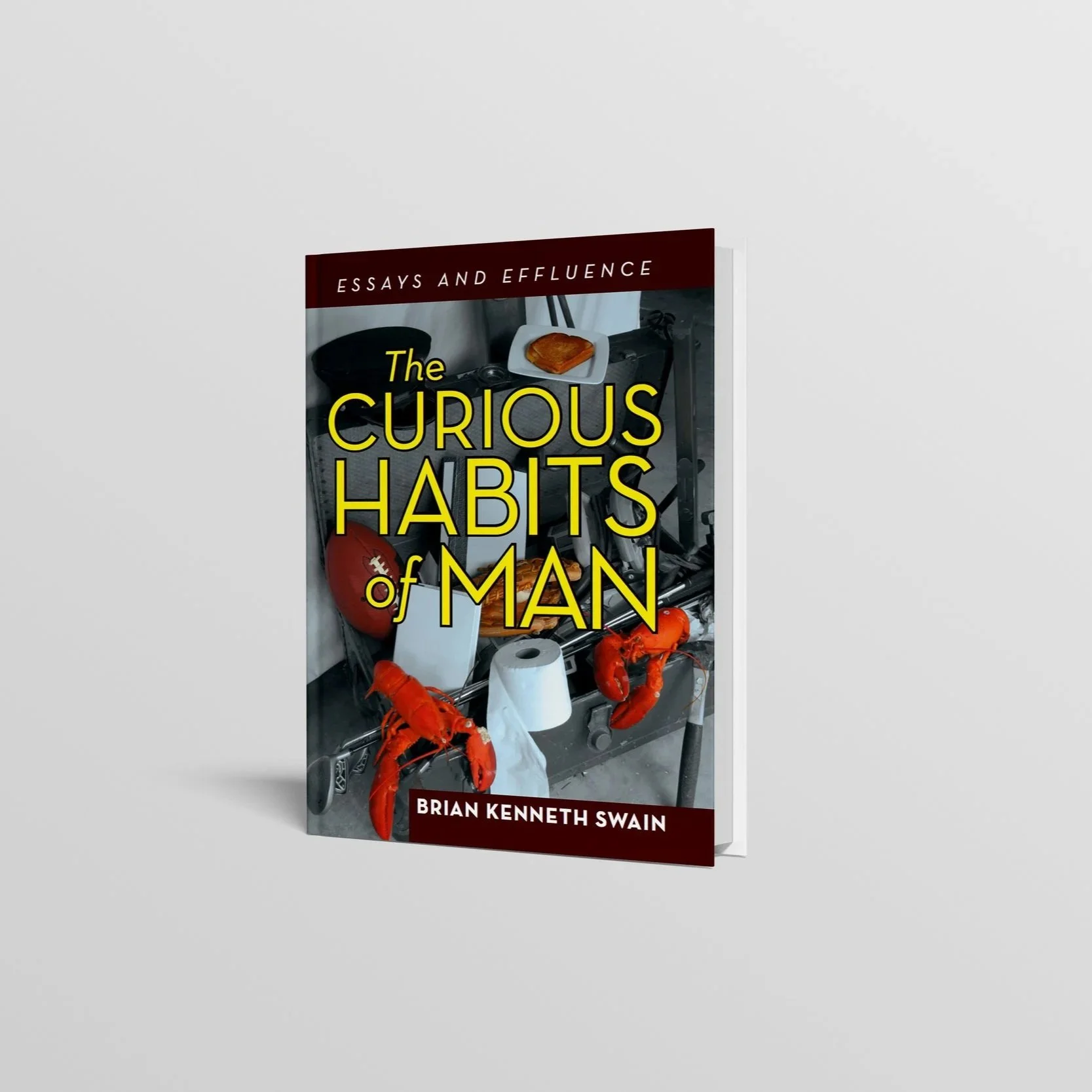
The Curious Habits of Man
The Curious Habits of Man shares an amusing glimpse at life as one man contemplates many of our greatest-and smallest-questions.
What is the one true secret to weight loss? What is the correct way to make a grilled cheese sandwich? Is the designated hitter rule the salvation of baseball or its undoing? Is it rational to be an optimist? And-the question that haunts us all- should toilet paper unwind over the top of the roll or from underneath?
In his first collection of essays, author Brian Kenneth Swain tackles hundreds of life’s questions while exploring a vast array of subjects-from tubas to two year-olds, from field goals to child labor laws, and from high school shop class to the worst round of golf ever played. With an acerbic wit and an honest approach, Swain shares his perspective on such pivotal matters as how to ski without losing a limb or your self-esteem, how to correctly prepare and consume lobster according to Maine standards, and whether marketing ploys hypnotically convince consumers to replace perfectly functioning items without a second thought. Swain encourages a kind of tongue-in-cheek thinking that prompts us to take a second look at the world around us.
Excerpt from The Curious Habits of Man
There can be no greater marketing triumph than the creation and promoting of bottled water … Never mind that something like seventy percent of all bottled water comes directly and unapologetically, without being changed in any way, from municipal systems (i.e., tap water), or that bottled water is almost certainly less healthy than tap water by virtue of residing for months in plastic bottles, potentially absorbing all manner of petrochemicals that leach fro them plastic, or that while the safety and quality of municipal water is closely regulated, there are no analogous regulations at all for bottled water. All these realities notwithstanding, people the world over have, in less than a decade, voluntarily begun handing over as much as two dollars a bottle for something that is available for free in unlimited quantities. There is no plausible explanation for such a fantastic turn of events save for marketing. By tying notions of your personal image and self-worth to the brand on a bottle of water you carry around, marketers have succeeded in convincing people not only that they cannot do without the bottled product, but that there is actually something wrong with drinking the free variety.